Knowing your skin type is the first step to building a skincare routine that actually works. Using the wrong products — even good ones — can leave your skin feeling worse than before. Here is a simple guide to the three most common skin types and what works best for each.
Dry Skin
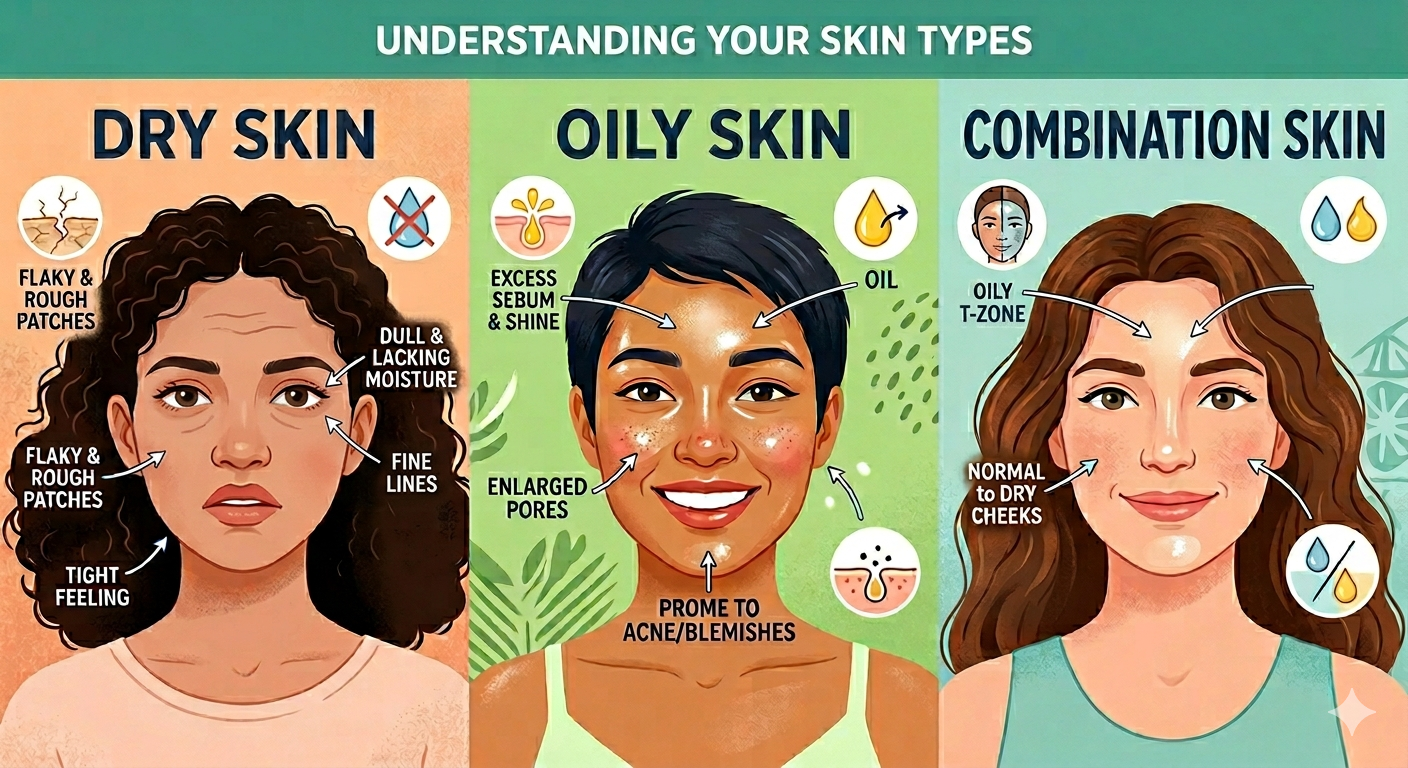
Dry skin lacks moisture and natural oils. It tends to feel rough, flaky, and dull, and may feel tight or stretched after washing. This skin type needs consistent hydration and support for the skin barrier.
Routine tip: Use a mild, non-foaming cleanser, follow with a ceramide-rich moisturiser containing nourishing butters and glycerine, and finish with a suitable sunscreen for daily protection.
Oily Skin
Oily skin produces excess sebum from the oil glands. The skin feels oily within 1–2 hours of washing, appears shiny, has enlarged open pores, and is prone to frequent breakouts and pimples.
Routine tip: Use a gel or foaming cleanser with salicylic acid to help remove excess oil. Follow with a lightweight, oil-free or gel-based moisturiser, and choose a matte or gel sunscreen for comfortable daily wear.
Combination Skin
Combination skin has features of both dry and oily skin. The cheeks are usually dry, while the forehead, nose, and chin — the T-zone — tend to be oily. Seasonal variation is common with this type.
Routine tip: This skin type benefits from a personalised approach. Opt for a hydrating moisturiser and sunscreen during winter, and lighter, oil-free formulas during summer.
A Note on Skincare
Skincare does not have to be complicated. Staying consistent and choosing products suited to your skin type can make a real difference. The routines above are meant for skin without specific concerns.
If you are dealing with issues like acne, pigmentation, sensitivity, or early signs of ageing, it is always better to consult a dermatologist and follow a personalised routine with the right active ingredients for your skin.